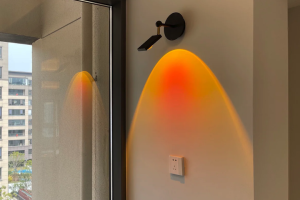
Voice Controlled Portable Lamp with Sleek Concrete Finish Design

Many people wonder if a voice-controlled portable lamp with a sleek concrete finish is just a gimmick or genuinely useful. The short answer is: yes, it can be incredibly useful, blending convenient control with a modern aesthetic that suits many homes. It’s not just about turning lights on and off hands-free; it’s about integrating lighting into your daily routine in a more natural way, all while looking good doing it.
The Appeal of Voice Control in Lighting
Voice control, at its core, offers a hands-free way to interact with your environment. For lighting, this means no more fumbling for switches in the dark, especially when your hands are full or you’re already cozy in bed. It’s a subtle but impactful shift in how we manage our living spaces.
Convenience in Everyday Scenarios
Think about getting ready for bed. You’re already tucked in, but realize you left the lamp on across the room. With voice control, a simple command changes that. Or perhaps you’re cooking, hands covered in flour, and need more light on your workspace. A quick “Hey [assistant name], turn on the kitchen lamp” solves the problem without making a mess. This isn’t just about laziness; it’s about efficiency and reducing minor friction points in your day. For those with mobility challenges, voice control can be a significant accessibility aid, granting greater independence over their immediate surroundings.
Integration with Smart Home Ecosystems
Most voice-controlled devices, including these lamps, are designed to integrate with larger smart home platforms like Amazon Alexa, Google Assistant, or Apple HomeKit. This means your lamp isn’t an isolated device; it becomes part of a broader network. You can include it in routines, so when you say “Good morning,” the lamp might gradually brighten alongside your smart blinds opening. This interconnectedness allows for more personalized and automated lighting experiences, moving beyond simple on/off commands to creating ambient scenes or even simulating natural daylight cycles. The ease of setup and connection to existing hubs is often a key consideration for consumers looking to expand their smart home capabilities.
Beyond Basic On/Off: Advanced Voice Commands
While turning a lamp on and off is fundamental, voice control can offer much more. Depending on the lamp’s capabilities and its integration, you can often adjust brightness levels with commands like “Dim the lamp to 50%.” Some lamps allow for color temperature changes, letting you shift from a cool, bright light for reading to a warm, soft glow for relaxing. If the lamp supports RGB colors, you could even ask it to “Change the lamp to blue” for a mood-setting effect. These granular controls elevate the lamp from a simple light source to a tool for dynamic ambiance, all managed through natural language. The precision and speed of these adjustments often surpass the experience of fumbling with physical buttons or sliders.
Why a Portable Lamp Makes Sense
Portability adds another layer of utility to the voice-controlled lamp. Unlike a fixed fixture, a portable lamp can go where you go, offering light exactly where and when you need it. This flexibility is a key differentiator.
Lighting on Demand, Anywhere
Imagine hosting a dinner party and needing extra ambient light on your outdoor patio, or moving your workspace from the desk to a comfy armchair. A portable lamp handles these situations effortlessly. It’s not constrained by outlets, assuming it has a decent battery life, and can provide focused light for tasks or diffuse light for atmosphere. This adaptability means you can optimize your lighting for various activities and moods without needing multiple permanent fixtures or complex wiring. Its ability to move between rooms also means a single lamp can serve multiple purposes throughout the day, maximizing its value.
Battery Life and Charging Considerations
For a truly portable experience, battery life is crucial. A good voice-controlled portable lamp will offer several hours of continuous use on a single charge, ideally eight hours or more for practical everyday scenarios. Most will charge via USB-C, which is a convenient and widely adopted standard. Look for lamps that provide clear indicators of battery level so you’re not caught in the dark unexpectedly. Fast charging capabilities are also a plus, minimizing downtime. Some lamps might even offer wireless charging, adding another layer of convenience, though this is less common for larger, higher-capacity batteries. The type of battery (e.g., lithium-ion) and its capacity in mAh will directly influence its performance.
Durability for Movement and Outdoor Use
Since portability implies movement, the lamp needs to be robust. A concrete finish, beyond its aesthetic appeal, often contributes to a lamp’s stability and perceived durability. However, it’s worth checking the specific IP rating if you intend to use it outdoors. An IP44 rating, for example, would protect against splashes of water, making it suitable for a patio. For general indoor portability, impact resistance is also a factor – a lamp that can withstand an accidental nudge or tip without damage is far more practical. The base should be stable and heavy enough to prevent easy knocking over, especially if it’s going to be placed on uneven surfaces or in busy areas.
The Aesthetic of a Sleek Concrete Finish
The concrete finish isn’t just about ruggedness; it’s a deliberate design choice that speaks to a particular contemporary aesthetic. It’s about bringing an industrial, minimalist, and natural texture into often softer interior spaces.
Modern and Industrial Design Trends
Concrete, once relegated to construction, has found a strong footing in modern interior design. Its raw, unpolished look offers a stark contrast to more traditional or overly decorated items. A sleek concrete finish on a lamp embodies minimalism, focusing on form and texture rather than ornamentation. It fits well within industrial-chic, Scandinavian, and contemporary design themes, adding a touch of urban sophistication. This aesthetic choice suggests a preference for honest materials and understated elegance, making the lamp a statement piece that complements rather than competes with its surroundings. The inherent variations in concrete also mean each lamp can have a subtly unique texture, adding to its character.
How Concrete Complements Different Interiors
The beauty of concrete’s neutral grey tones is its versatility. It can act as a grounding element in a bright, colorful room, or seamlessly blend into a monochromatic scheme. In a wood-heavy interior, concrete adds a contrasting texture that prevents the space from feeling too rustic. Paired with metal accents, it enhances an industrial vibe. With soft textiles and warm lighting, it can create a surprisingly cozy and balanced atmosphere. It’s a material that allows other design elements to shine while still holding its own as a significant textural component. This adaptability makes it suitable for a wide range of decorating styles, from ultra-modern lofts to more transitional family homes.
The Tactile Experience and Perceived Quality
Beyond its visual appeal, the concrete finish offers a unique tactile experience. It’s cool to the touch, often smooth but with a subtle grit that communicates solidity and craftsmanship. This isn’t a lightweight, hollow plastic object; it feels substantial and well-made. This perceived quality is part of its allure, suggesting a durable product designed to last. The weight of concrete also contributes to the lamp’s stability, reducing the likelihood of accidental tipping. This combination of visual and tactile elements elevates the lamp from a mere functional item to an object with inherent material integrity and artistic merit.
Key Features to Look for in a Voice-Controlled Concrete Lamp
When you’re considering purchasing one of these lamps, it’s helpful to know what specific features contribute to a good user experience and overall value. It’s not just about the “concrete” and “voice control” labels.
Voice Assistant Compatibility
The first and most critical feature is compatibility with your preferred voice assistant. Most lamps will support either Amazon Alexa or Google Assistant, and sometimes both. If you’re invested in Apple’s ecosystem, look for HomeKit compatibility, though this is less common. Ensure the lamp connects reliably to your smart home hub or directly to your Wi-Fi network. Some lamps might use their own proprietary app for initial setup, which then bridges to the main voice assistants. Check reviews for reports on consistent connectivity and responsiveness of voice commands. A lamp that frequently drops its connection or misinterprets commands will quickly become frustrating.
Light Quality and Customization Options
A lamp, first and foremost, needs to provide good light. Look for information on lumen output – a higher number means brighter light. Consider the color temperature range; lamps that can shift from warm (2700K-3000K) to cool white (5000K-6000K) offer more versatility. Dimming capabilities are essential for setting the mood or task lighting. If you’re interested in mood lighting, check for RGB color options. The quality of the light itself, meaning how evenly it’s diffused and if it causes harsh shadows, is also important. Some lamps may offer preset scenes or customizable schedules through an accompanying app, adding further layers of light control.
Battery Life and Charging Solution
As mentioned, portability relies heavily on battery. Aim for a lamp offering at least 8 hours of battery life at a moderate brightness setting. Information about charging time is also valuable – a lamp that takes too long to recharge can be inconvenient. USB-C charging is the most convenient option due to its widespread adoption. Some lamps might even offer power bank functionality, allowing you to charge other devices from the lamp’s battery, which can be a neat bonus feature for a portable device. Always check if the charging cable and adapter are included, or if you need to supply your own.
Durability and Build Quality
The concrete finish should be robust and well-sealed to prevent flaking or excessive dust. Check for a stable base and good overall construction. If the lamp has internal components, ensure they feel secure and don’t rattle. For potential outdoor use, verify the IP rating. Beyond the concrete, consider the material of any diffusers or metal accents – these should also feel high quality and withstand regular handling. A lamp that feels flimsy or poorly assembled, regardless of its features, will likely disappoint in the long run. Good build quality contributes significantly to the longevity and overall satisfaction with the product.
User Interface and Companion App (If Applicable)
Even with voice control, a physical button or two for basic on/off and brightness adjustments can be very useful as a fallback, or when voice commands aren’t practical. If the lamp has a companion app, evaluate its usability. Is it intuitive? Does it offer useful features like scheduling, grouping with other smart lights, or firmware updates? An clunky or unreliable app can detract from the overall experience, even if the voice control is excellent. Good apps provide a visual way to fine-tune settings that might be cumbersome through voice alone.
Setting Up and Using Your Voice-Controlled Concrete Lamp
Getting your new lamp up and running is usually a straightforward process, but a few tips can help ensure a smooth experience and maximize its utility.
Initial Setup and Pairing
Most voice-controlled lamps will require an initial setup process, typically involving a smartphone app. First, charge the lamp fully. Then, download the lamp’s dedicated app (if it has one) or the app for your chosen smart home ecosystem (e.g., Google Home, Amazon Alexa). Follow the in-app instructions to put the lamp into pairing mode. This usually involves holding a button on the lamp for a few seconds. Your phone will then detect the lamp, and you’ll connect it to your home’s Wi-Fi network. Make sure your Wi-Fi is 2.4GHz, as many smart devices don’t support 5GHz. Once connected, the lamp should appear in your smart home app, ready for voice control.
Basic Voice Commands to Get Started
After pairing, you can immediately start using basic voice commands. Here are some common examples, assuming you’ve named your lamp something simple like “concrete lamp” or “desk lamp”:
- “Hey [assistant name], turn on the [lamp name].”
- “Hey [assistant name], turn off the [lamp name].”
- “Hey [assistant name], dim the [lamp name].” (This often dims it to a default low setting).
- “Hey [assistant name], brighten the [lamp name].” (This often brightens it to a default high setting).
- “Hey [assistant name], set [lamp name] to 50% brightness.”
- “Hey [assistant name], change [lamp name] to warm white.” (If supported).
- “Hey [assistant name], change [lamp name] to blue.” (If RGB supported).
Experiment with different phrasing, as voice assistants are quite good at understanding natural language variations.
Integrating into Smart Home Routines
Once you’re comfortable with individual commands, consider incorporating your lamp into smart home routines. These are automated sequences of actions triggered by a single command or a specific event.
- Morning Routine: “Hey [assistant name], good morning.” (Triggers your lamp to gradually brighten over 10 minutes, your coffee maker to start, and news briefing to play).
- Evening Routine: “Hey [assistant name], good night.” (Triggers your lamp to dim to 10% and then turn off after 15 minutes, locks your smart doors, and arms your security system).
- Movie Night Scene: “Hey [assistant name], movie time.” (Triggers your living room lights, including the concrete lamp, to dim to a warm, low setting, and potentially turns on your TV).
Setting up routines usually involves going into your smart home app (e.g., Alexa app, Google Home app) and navigating to the “Routines” or “Automations” section. From there, you can define the trigger and the subsequent actions.
Maintenance and Care for the Concrete Finish
A concrete finish is generally low maintenance, but a few tips can help keep it looking good.
- Cleaning: For general dusting, a dry microfiber cloth is usually sufficient. For minor smudges or marks, a damp cloth with a small amount of mild, non-abrasive soap can be used. Avoid harsh chemical cleaners, as these could potentially strip any protective sealant on the concrete or discolor it.
- Preventing Stains: Concrete is porous, so while sealed, it’s best to wipe up any spills (especially liquids like coffee, wine, or oil) quickly to prevent staining.
- Handling: While durable, concrete can chip if dropped or hit against a hard surface. Handle the lamp with care, especially when moving it.
- Battery Care: To prolong battery life, try not to frequently let the battery drain completely to 0%, and avoid leaving it plugged in constantly once fully charged if it’s meant to be portable. Follow the manufacturer’s specific recommendations for battery care.
By understanding these aspects, you can make an informed decision about whether a voice-controlled portable lamp with a sleek concrete finish is the right addition to your home.